Islamic Calendar and Its Significance: A Complete Guide
The Islamic Calendar, also known as the Hijri Calendar, is more than just a method of timekeeping—it’s a sacred timeline deeply rooted in the faith, history, and rituals of Islam. Understanding the Islamic calendar helps Muslims observe religious duties, celebrate key events, and reflect on spiritual milestones throughout the year.
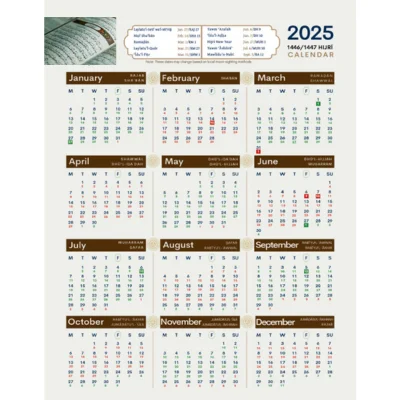
In this comprehensive guide, we’ll cover the origins, structure, key months, and spiritual significance of the Islamic calendar—plus how it influences Islamic practices like Ramadan, Hajj, Eid, and more.
What is the Islamic Calendar?
The Islamic Calendar is a lunar calendar based on the cycles of the moon, unlike the Gregorian (solar) calendar used globally. It consists of 12 months, totaling approximately 354 or 355 days, making it about 10–11 days shorter than the Gregorian year.
This difference means that Islamic dates shift earlier each year in the Gregorian calendar. Over time, seasons rotate through Islamic months—so Ramadan, Hajj, and other important events occur in different seasons every few years.
👉 Related: 5 Pillars of Islam: A Complete Overview
Historical Origin of the Hijri Calendar
The Islamic calendar was officially introduced by Caliph Umar ibn al-Khattab (RA) during his leadership (around 638 CE). He established it starting from the year of the Hijrah—the Prophet Muhammad’s (PBUH) migration from Makkah to Madinah in 622 CE.
This migration marked a turning point for Muslims—transitioning from persecution to the formation of an Islamic state. As such, it became the natural starting point for an Islamic timeline.
The calendar begins from Muharram in the year of the Hijrah, hence it’s called the Hijri calendar.
Structure of the Islamic Calendar
The Hijri calendar has 12 lunar months, each lasting either 29 or 30 days depending on the moon sighting.
Here’s a breakdown of the months:
| Month # | Name | Significance |
|---|---|---|
| 1 | Muharram | Sacred month, includes Day of Ashura |
| 2 | Safar | Historically associated with travel |
| 3 | Rabi al-Awwal | Birth of Prophet Muhammad (PBUH) |
| 4 | Rabi al-Thani | Also called Rabi al-Akhir |
| 5 | Jumada al-Awwal | No major historical events |
| 6 | Jumada al-Thani | End of the winter period |
| 7 | Rajab | Sacred month, Isra and Mi’raj occurred |
| 8 | Sha’ban | Prepares for Ramadan, mid-Sha’ban prayers |
| 9 | Ramadan | Month of fasting and Quranic revelation |
| 10 | Shawwal | Eid al-Fitr and fasting six days of Shawwal |
| 11 | Dhul-Qi’dah | Sacred month; pre-Hajj period |
| 12 | Dhul-Hijjah | Hajj and Eid al-Adha |
👉 Explore: Ramadan: Importance, Rituals, and Fasting Guide
👉 Read next: The Ultimate Guide to Hajj and Its Rituals
Sacred Months in Islam
Among the 12 months, four are considered sacred as per the Quran:
“Indeed, the number of months with Allah is twelve… of them, four are sacred.”
(Surah At-Tawbah 9:36)
These sacred months are:
- Muharram
- Rajab
- Dhul-Qi’dah
- Dhul-Hijjah
What makes them sacred?
- Fighting is prohibited unless in defense.
- Rewards for good deeds are multiplied.
- Extra emphasis on taqwa, repentance, and prayer.
Key Dates and Their Significance
1. 10th Muharram (Ashura)
- Commemorates the day Prophet Musa (A.S.) was saved from Pharaoh.
- Observed with fasting and remembrance.
- Also a day of mourning for Shia Muslims (martyrdom of Imam Hussain).
2. 12th Rabi al-Awwal
- Believed to be the birthday of the Prophet Muhammad (PBUH).
- Celebrated as Mawlid in many Muslim cultures.
3. 27th Rajab (Isra and Mi’raj)
- Night journey and ascension of the Prophet to the heavens.
4. 15th Sha’ban (Shab-e-Bara’at)
- Night of forgiveness and divine decree.
- Sunnah to engage in prayer and fasting.
5. Entire Month of Ramadan
- Fasting from dawn to sunset.
- Night prayers (Taraweeh), Quran recitation, and charity.
6. Eid al-Fitr (1st Shawwal)
- Celebrated after Ramadan with prayers, food, and Zakat al-Fitr.
7. 8th–13th Dhul-Hijjah
- Hajj is performed during these days.
- 9th Dhul-Hijjah is the Day of Arafah—fasting on this day expiates sins of two years.
8. 10th Dhul-Hijjah (Eid al-Adha)
- Commemorates the sacrifice of Prophet Ibrahim (A.S.).
- Muslims perform Qurbani (animal sacrifice) and distribute meat to the poor.
👉 Deep dive: Day of Arafah: Virtues, Fasting, and Duas
👉 Don’t miss: Eid al-Adha: Meaning, Rituals, and Sunnahs
Islamic Calendar vs Gregorian Calendar
| Feature | Islamic (Hijri) Calendar | Gregorian Calendar |
|---|---|---|
| Basis | Lunar | Solar |
| Days in a year | 354 or 355 | 365 or 366 |
| Religious context | Entirely religious | Mainly secular |
| Months | 12 (Muharram to Dhul-Hijjah) | 12 (Jan to Dec) |
| Usage | Primarily for religious observance | Civil and global usage |
Because of its lunar nature, Islamic months rotate through the seasons over a 33-year cycle.
How Is the Islamic Calendar Used Today?
Though it’s not the official calendar in most countries, the Hijri calendar is essential for:
- Determining dates for Ramadan, Eid, Hajj, and other religious obligations
- Tracking Zakat eligibility and payments
- Marking Islamic historical events
- Structuring Islamic school and madrasa curriculums
Some Muslim-majority countries like Saudi Arabia still use the Hijri calendar for religious and governmental purposes.
Moon Sighting Controversies
Since Islamic months begin with the sighting of the new moon, there’s often debate about:
- Local vs global moon sighting
- Using astronomical calculations
- Celebrating Eid on different days in different countries
Despite modern tools, the Prophetic method of physical moon sighting is still widely honored.
“Fast when you see it [the crescent] and break your fast when you see it.”
– [Hadith – Sahih al-Bukhari]
Spiritual Significance of the Islamic Calendar
The Islamic calendar serves more than scheduling—it teaches Muslims to:
- Live in rhythm with natural cycles (moon phases)
- Develop consciousness of time and accountability
- Align their life with the Prophet’s legacy
- Renew faith periodically through milestones like Ramadan, Eid, and Hajj
It’s a spiritual compass for Muslims, guiding them through worship, reflection, sacrifice, and celebration.
Final Thoughts
The Islamic Calendar is a sacred timeline that reflects the rhythm of a Muslim’s spiritual life. It not only preserves the legacy of the Prophet (PBUH) and early Islamic history but also keeps believers anchored to their faith throughout the year.
Whether you’re observing Ramadan, preparing for Hajj, or simply reflecting on sacred nights, the Hijri calendar offers endless opportunities for spiritual growth, renewal, and connection to Allah.