Hajj al-Tamattu (Arabic: حج التمتع) is one of the three forms of performing Hajj and is especially popular among international pilgrims. The term “Tamattu” literally means to enjoy or take benefit, which reflects the ease and flexibility this method offers.
It allows the pilgrim to perform Umrah and Hajj separately, within the same pilgrimage season — without having to remain in a continuous state of Ihram throughout. After completing Umrah, the pilgrim exits Ihram, resumes normal life temporarily, and then re-enters Ihram for Hajj.
🔹 What Is Hajj al-Tamattu?
Hajj al-Tamattu is considered the easiest and most convenient form of Hajj. It is highly recommended for non-residents of Makkah (known as Afaqi pilgrims), and therefore, it is the most commonly performed type of Hajj today.
It consists of two separate acts of worship:
- Umrah, performed during the months of Hajj (Shawwal, Dhul Qa’dah, and Dhul Hijjah)
- Hajj, which starts on the 8th of Dhul Hijjah
The pilgrim is referred to as a Mutamatti.
According to the Hanafi school, it is disliked (makruh) for residents of Makkah to perform this type, though it remains valid if done.
Why Choose Hajj al-Tamattu?
- It provides a spiritual break between Umrah and Hajj
- The pilgrim can refresh and prepare mentally and physically before Hajj begins
- Offers a chance to perform two major acts of worship in one journey
- Convenient for those coming from afar, who would otherwise have limited access to the holy cities
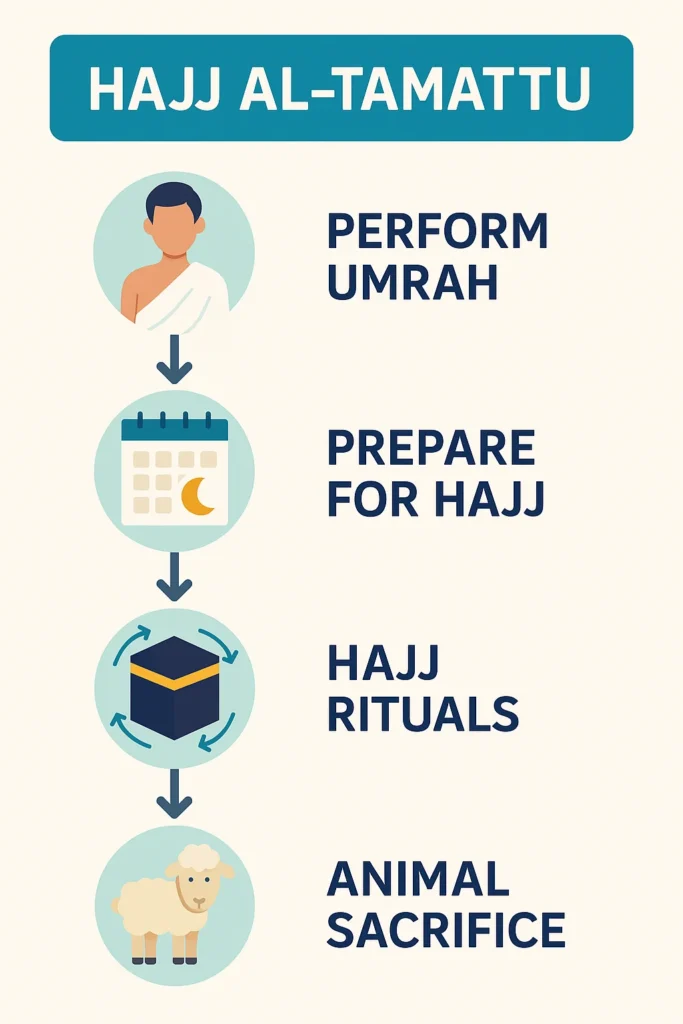
Step-by-Step: How to Perform Hajj al-Tamattu
1. Perform Umrah
- Enter Ihram at the Miqat with the intention of Umrah.
- Travel to Makkah and perform the following:
- Tawaf al-Umrah (circumambulate the Ka’bah seven times)
- Pray two rak’ahs behind Maqam Ibrahim if possible
- Drink Zamzam water
- Perform Sa’i between Safa and Marwah
- Complete Umrah with Halq (shaving the head) or Taqsir (trimming)
↳ Men: Trim (for now); you’ll shave during Hajj
↳ Women: Trim a fingertip length from hair
- You are now out of the state of Ihram and free from its restrictions.
🕊️ You can rest, change into normal clothing, and spiritually prepare for Hajj.
2. Prepare for Hajj
- On the 8th of Dhul Hijjah (Yawm at-Tarwiyah):
- Make a new niyyah (intention) for Hajj from your place of residence in Makkah
- Re-enter the state of Ihram
- There is no need to return to Miqat—you can enter Ihram from within Makkah
- Proceed with the Hajj rituals, including:
- Spending the night in Mina
- Standing at Arafat (the most essential pillar)
- Staying in Muzdalifah
- Ramy al-Jamarat (stoning of the devil)
- Animal sacrifice (Hady) – This is obligatory for Hajj al-Tamattu
- Tawaf al-Ifadah and Sa’i (again, for Hajj this time)
- Shaving/trimming the head and Tawaf al-Wada’ (farewell)
After all these rites, your Hajj is complete, and you are spiritually reborn, InshaAllah.
Key Points to Remember
| Feature | Description |
|---|---|
| Ihram Count | Twice: once for Umrah, once for Hajj |
| Hady (Animal Sacrifice) | Required |
| Ihram Break | Yes, between Umrah and Hajj |
| Ideal For | International pilgrims (non-residents) |
| Spiritual Benefit | Combines the reward of two sacred acts in one blessed journey |
Practical Tip
Most Hajj travel agencies arrange Hajj al-Tamattu by default, as it’s the most manageable format. Be sure to confirm with your group that the sacrifice (Hady) is included in your package, or arrange it in Mina through authorized agents.
Final Thoughts
Hajj al-Tamattu is not just a form of worship—it’s a beautiful balance of devotion, rest, and renewal. By allowing a short respite between Umrah and Hajj, it provides pilgrims with the spiritual strength and mental clarity to fully engage in the once-in-a-lifetime experience of Hajj.
May Allah accept the Hajj of every pilgrim and make it a means of forgiveness, elevation, and lasting transformation. Ameen.